

Pharmaceutical Biochemistry
Explore the molecular basis of life — from biomolecule chemistry and enzyme kinetics to metabolic pathways and hormonal signalling.
Unit 1: Unit 1: Introduction to Pharmaceutical Biochemistry
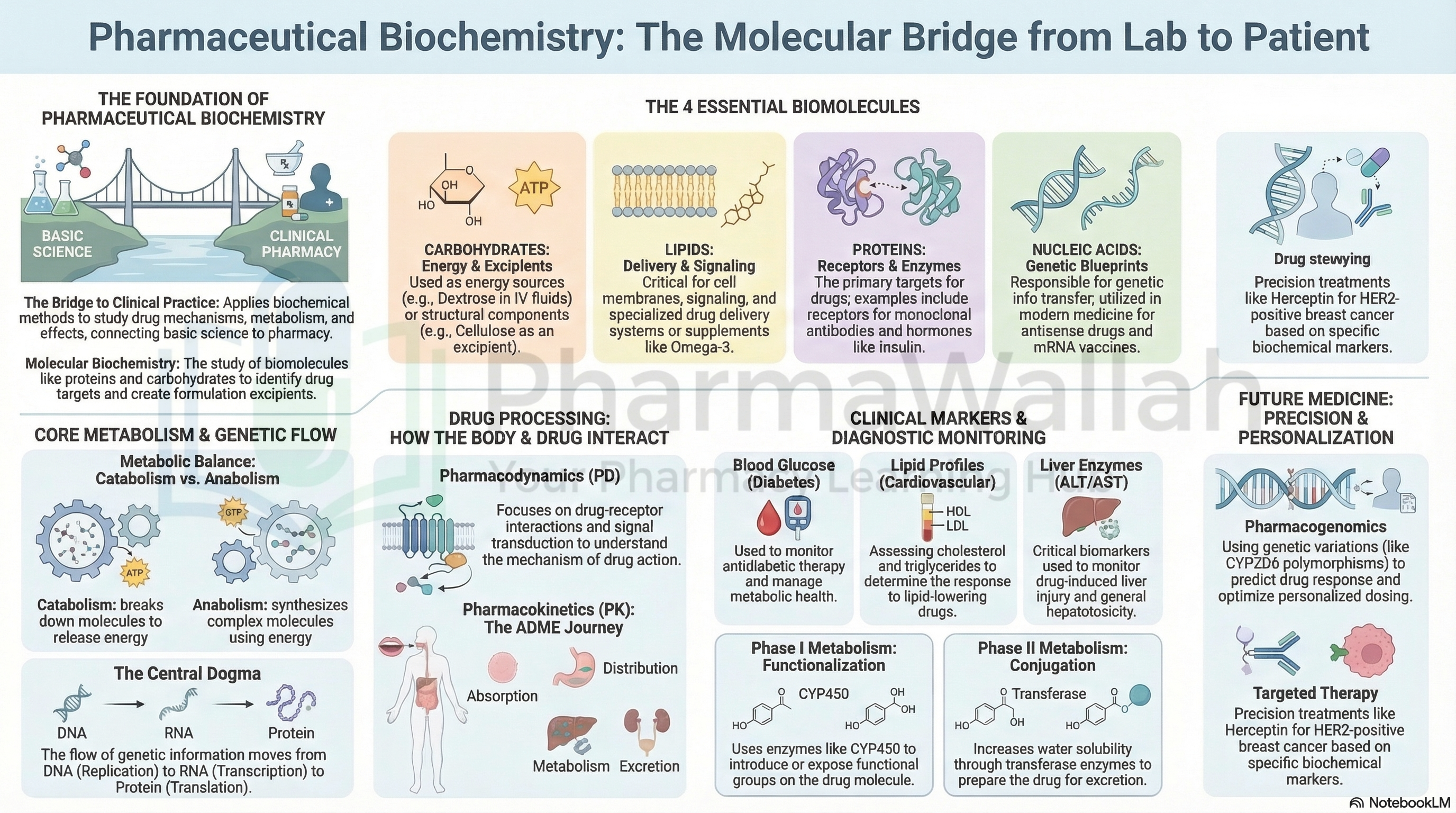
Scope of biochemistry in pharmacy, cell organisation, biomolecules overview, and the molecular logic of living systems.
Unit 1: Introduction to Pharmaceutical Biochemistry
Scope of biochemistry in pharmacy, cell organisation, biomolecules overview, and the molecular logic of living systems.
Unit 2: Basic Chemistry of Biomolecules: Carbohydrates, Lipids, Proteins & Amino Acids
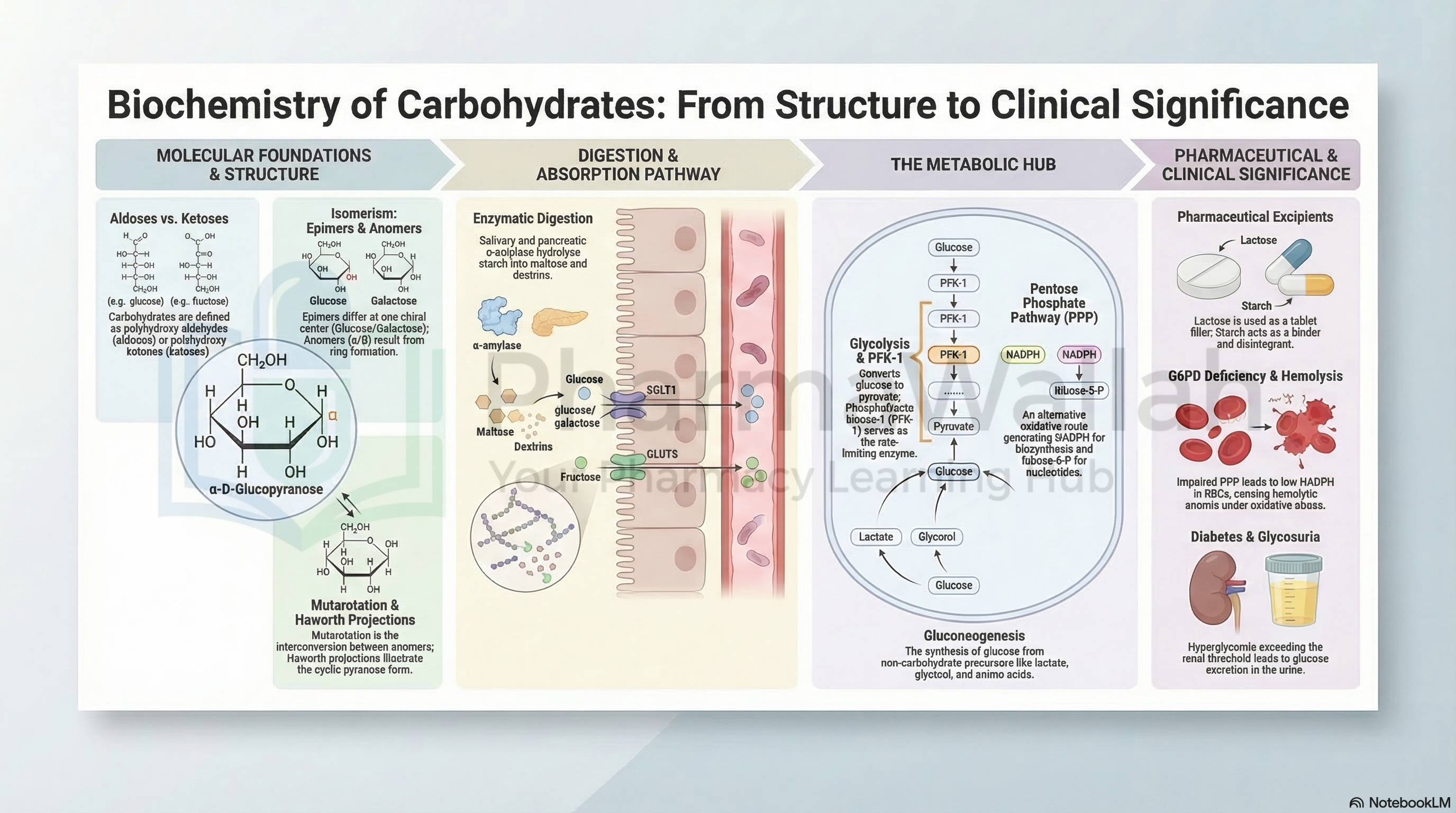
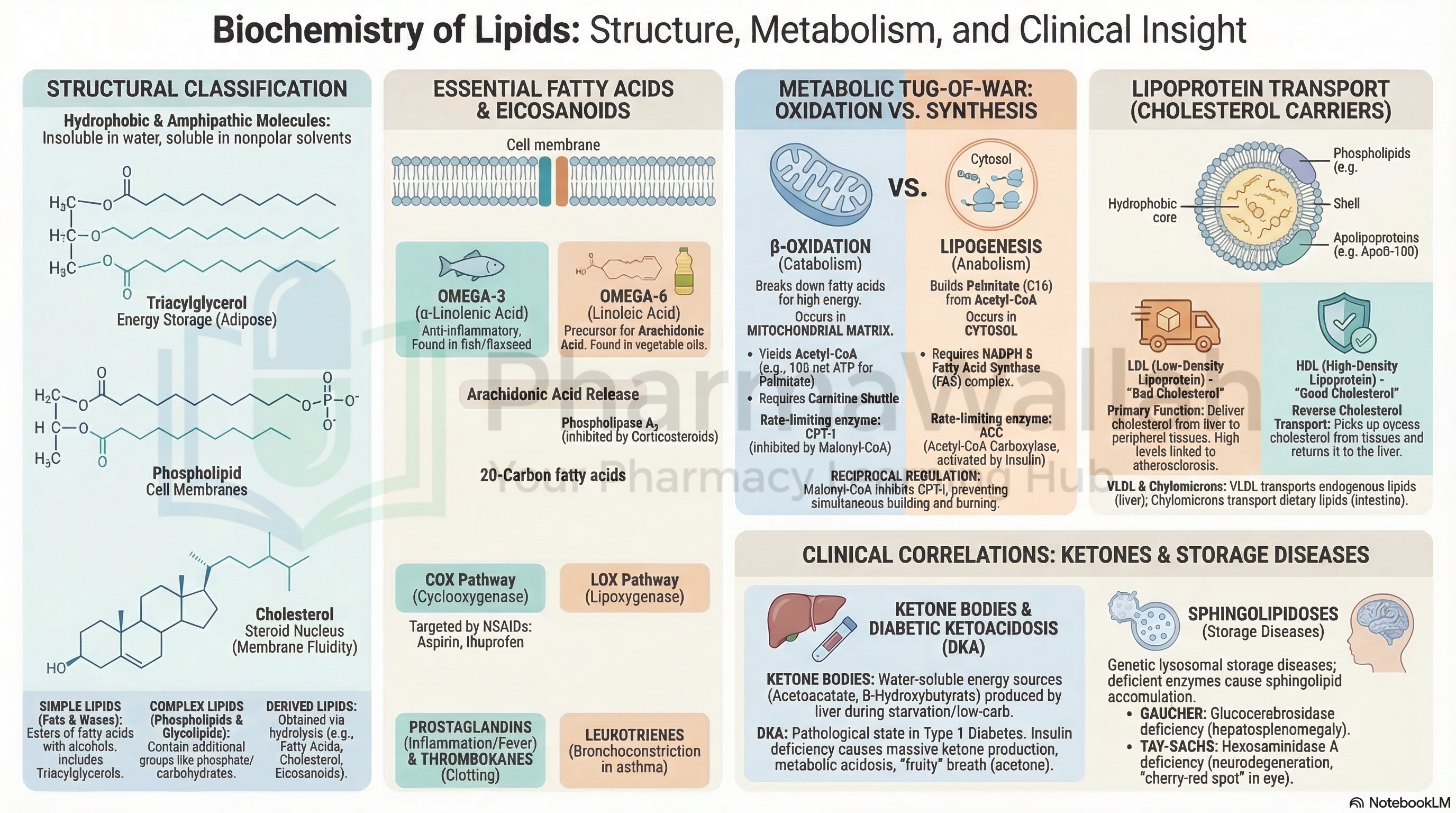
Chemical nature, classification, optical activity, reactions, and pharmaceutical importance of carbohydrates, lipids, proteins, and amino acids.
Unit 3: Bioenergetics
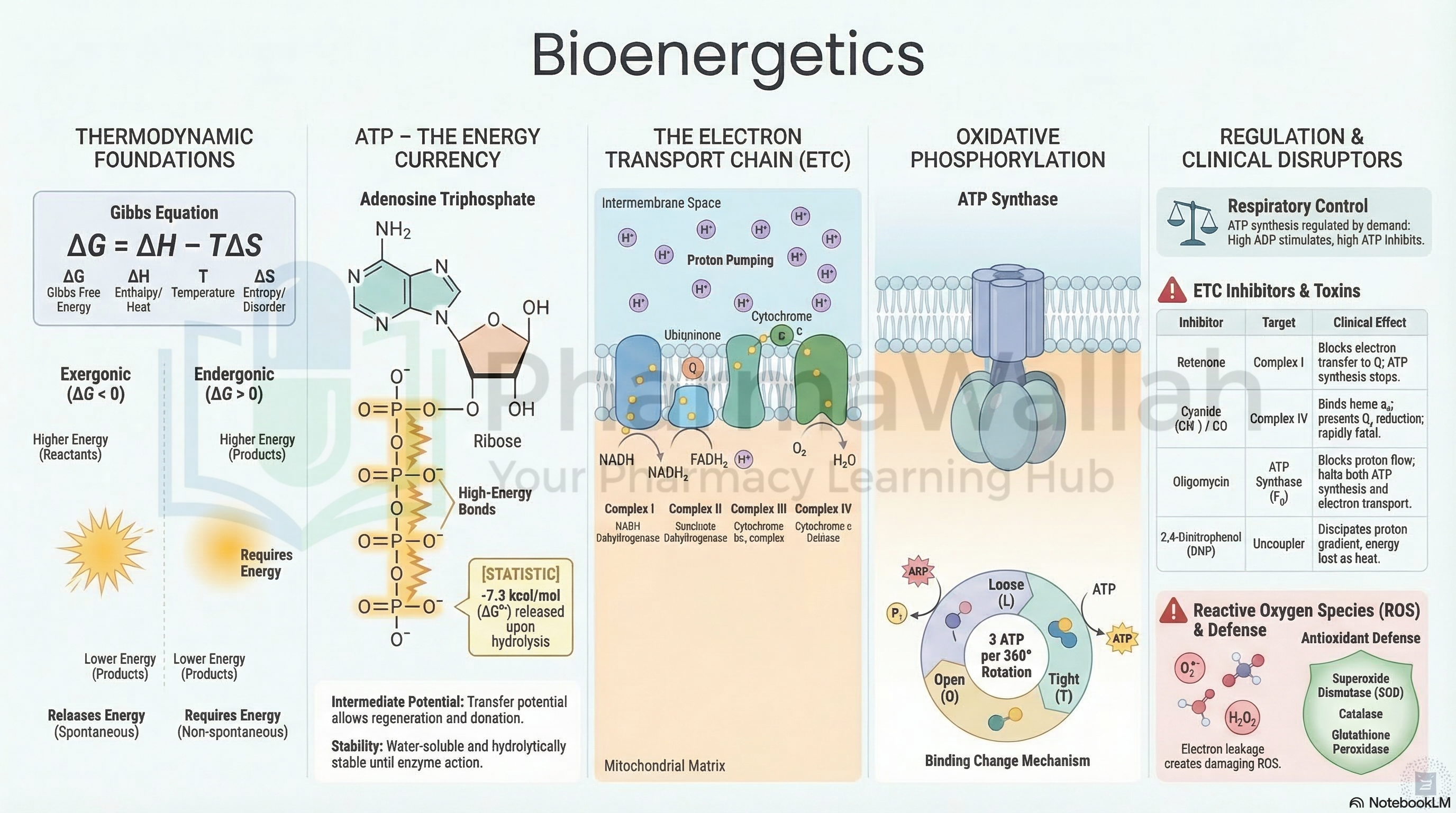
Laws of thermodynamics, free energy, ATP synthesis, oxidative phosphorylation, electron transport chain, and mitochondrial coupling.
Unit 4: Enzymes: Chemistry, Classification, Kinetics, Inhibition, and Mechanism of Action
Enzyme structure, classification, kinetics (Michaelis-Menten), inhibition types, allosteric regulation, and mechanisms of chymotrypsin and ribonuclease.
Unit 5: Metabolic Fate of Biomolecules: Carbohydrates, Lipids, Proteins & Amino Acids
Digestion, absorption, and metabolic pathways of carbohydrates, lipids, and proteins — including glycolysis, TCA cycle, β‑oxidation, urea cycle, and heme synthesis.